
Mark shares some insight into the cases where PHP clearly has the advantage over WordPress, and makes a solid argument for knowing the client types for each platform.
Updated December 20, 2023
Web Development Choices
Choosing the right technology for web development is crucial. This article explores the merits of using PHP and HTML without WordPress and highlights scenarios where each technology is most appropriate. While web development has evolved, you don’t always need the biggest hammer for the job.
Understanding when to use WordPress and when to opt for a simpler PHP and HTML approach is key to successful web development.

Advantages of WordPress
WordPress Ecosystem: Versatility and Functionality
WordPress is known for its vast ecosystem, offering a plethora of plugins and functionalities for various niches. This flexibility allows developers to meet diverse requirements efficiently. However, WordPress can be a behemoth, and not every project requires its extensive features.

When WordPress Might Be Overkill
While WordPress can cover a wide range of use cases, there are instances where it can be overkill. Smaller projects or websites that don’t demand heavy content development might not need the complexity of WordPress. It’s important to assess early on whether a client’s needs align with what WordPress excels at.

Considering PHP and HTML
PHP and HTML: Simplicity and Speed
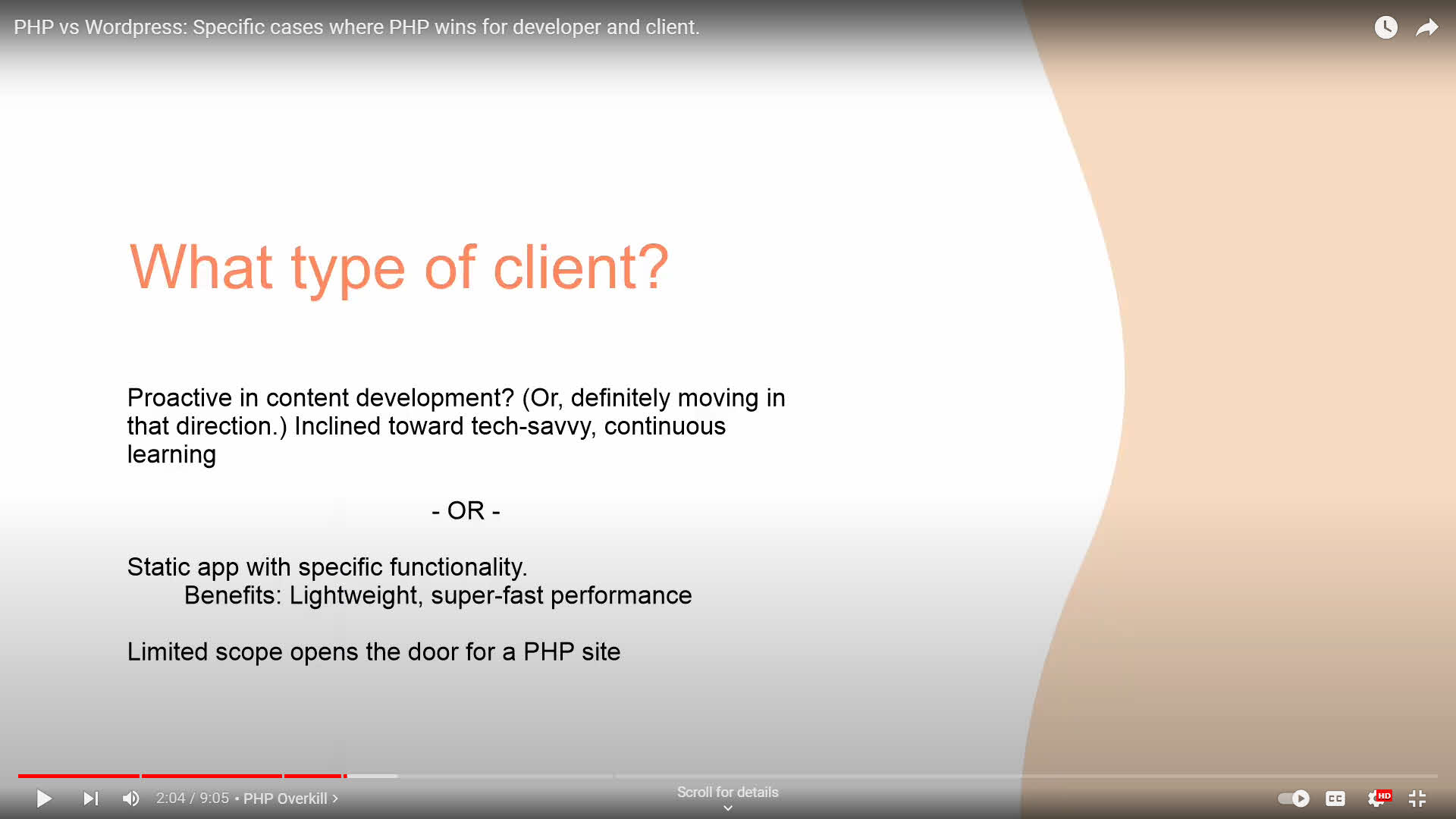
For projects with limited functionality or those that are more static in nature, PHP and HTML can be more efficient. They offer simplicity and speed, especially for basic functionalities like image uploaders or event calendars. With PHP and HTML, developers can create fast, lightweight websites without the overhead of WordPress.
Customization and Minimal Overhead
PHP and HTML allow for minimal scripting and customization to meet specific needs. They can efficiently handle many tasks with minimal performance overhead, making them ideal for straightforward projects.
Evaluating Client Needs
Client’s Content Development Plans
Understanding a client’s long-term content development plans is crucial. If a client anticipates the need for extensive content and functionality in the future, transitioning to WordPress might be more appropriate. However, for clients with a limited scope or who are not content-focused, PHP and HTML could be the better choice.
Cost and Maintenance Considerations
Using PHP and HTML can save costs related to training, server performance, and maintenance compared to WordPress. It’s essential to consider these factors when deciding which platform to use, especially for clients who are not tech-savvy or have limited budgets.

WordPress vs PHP and HTML: Making the Right Choice
When to Opt for WordPress
WordPress should be considered when a project requires comprehensive content development and the utilization of various plugins. It’s best suited for clients who need a robust platform for their evolving content needs
PHP and HTML for Specific, Limited Functions
For clients with specific, limited functionality requirements, PHP and HTML can be more appropriate. They offer the flexibility to create dynamic websites with essential features without the complexity of WordPress.
Subdomain Solutions and Future-Proofing
Leveraging Subdomains for Functionality
In some cases, using PHP and HTML on a subdomain while maintaining a main WordPress site can be an effective solution. This approach allows for specific functionalities without the need for a full WordPress installation.
Future-Proofing Client Websites
It’s important to future-proof client websites by choosing the right technology from the start. PHP and HTML can be sufficient for many use cases, and if needed, transitioning to WordPress later is always an option.
Choosing the Right Tool for the Job
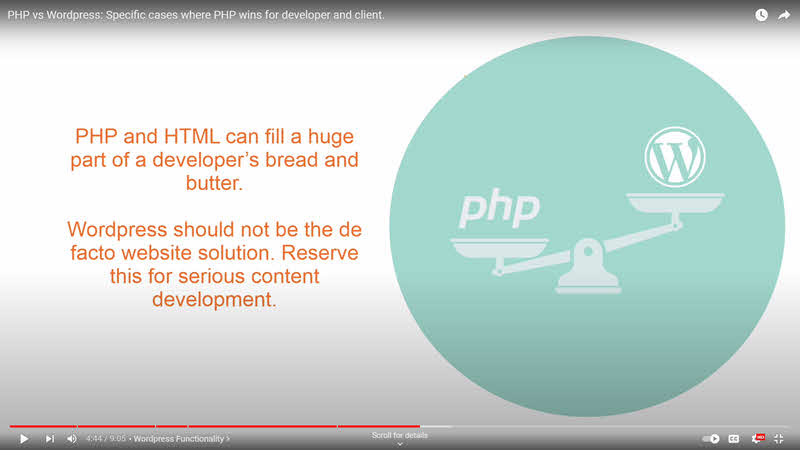
Both WordPress and PHP with HTML have their place in web development. The choice depends on the specific needs and future plans of the client. While WordPress offers extensive functionalities for content-heavy sites, PHP and HTML are ideal for simpler, more focused projects. By carefully considering the client’s requirements, developers can select the most suitable technology to create efficient, effective, and cost-conscious websites.
Recent Comments